

HOA 101 in North Texas: What You Should Know Before Buying
6-minute read
Key Takeaways
Not every North Texas home has an HOA.
Some HOA fees even include mowing your front yard.
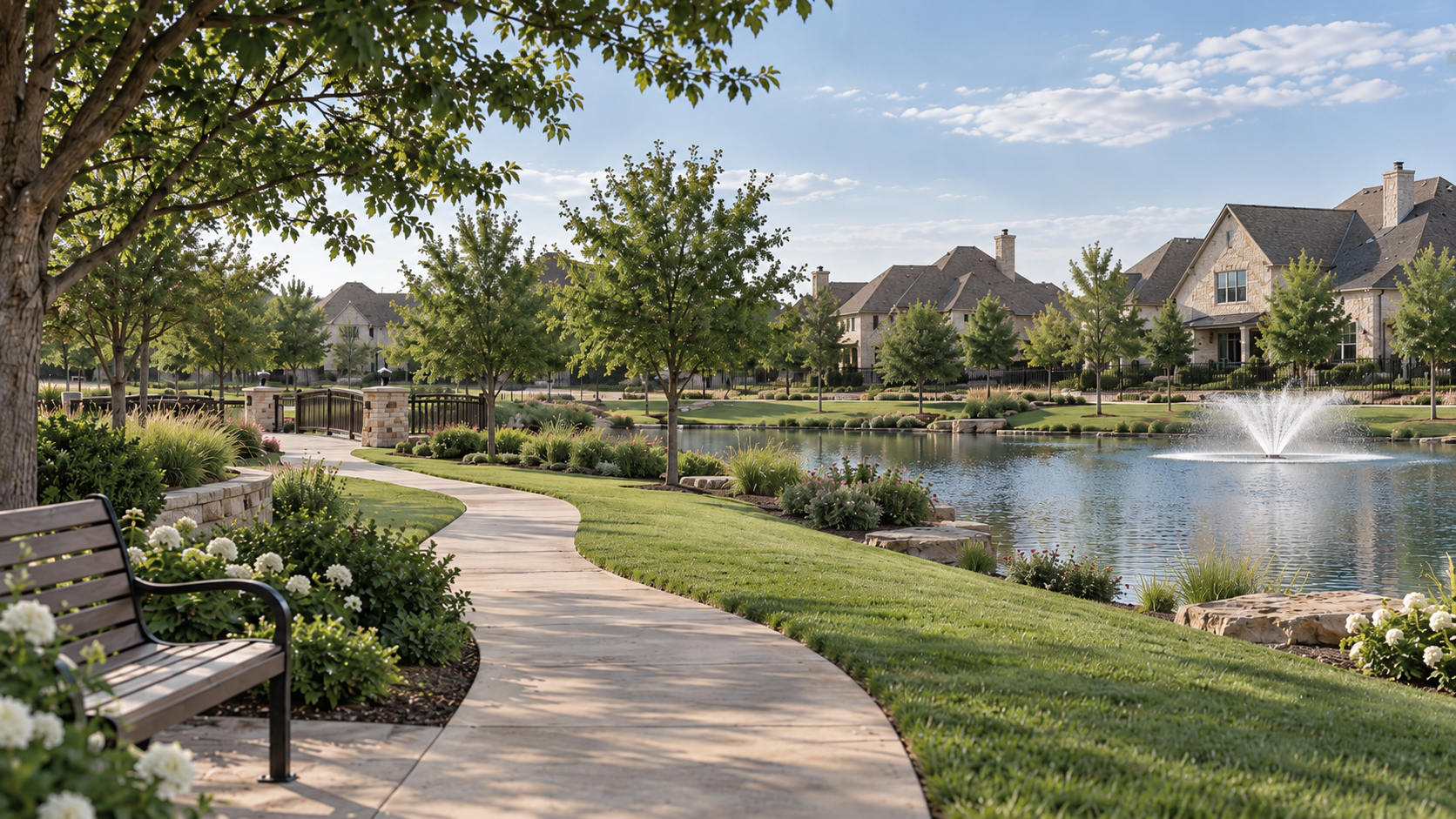
A well-run HOA shows up first in the common areas.
Not everyone in the same community pay the same fees.
Check how the HOA spends money before you buy, not after.
What an HOA Actually Is (and Why Not Every Place Has One)
I get asked about HOAs quite often. Some neighborhoods have one. Some don't. Supporters of HOAs say they keep neighborhoods orderly and preserve values, while opposers don’t like paying a “tax” and follow extra rules.
So who’s really right? It depends entirely on the one you're looking at, and that's really the whole point of this article. Let’s talk about HOAs.
An HOA, or homeowners association, is essential a board that runs a residential community, usually of the residents themselves. It collects dues from the people who live there, sets and enforces rules, and in exchange keeps shared spaces maintained and the overall appearance of the neighborhood fairly consistent.
Not every community has one. Plenty of older neighborhoods around Dallas, Plano, Frisco, McKinney, Allen, Prosper, and Celina have no HOA. No dues, no architectural review, and no shared amenities either. Most newer master-planned communities are likely to have one, since the pools, trails, and manicured entrances are part of what you're actually buying into.
What HOA Fees Actually Cover (And Why They're All Different)

Ask 5 different HOAs what their monthly fees cover and you'll get 5 different answers. In most Collin County master-planned communities, dues often fund shared amenities and services, pool maintenance, common area landscaping, trail upkeep, and resident events.
Some go even further. In Phillips Creek Ranch in Frisco, one of the more recognizable communities in North Texas, monthly fees include front yard maintenance as a standard part of the dues, not an upgrade. The exact amount varies by section and usually adjusts annually, so it’s always better to reach out to the HOA directly rather than trusting an internet search. Or let me know what community you’re thinking about, and I’ll get you the latest.
Fees might also vary within the same community. Light Farms in Celina, for example, dues currently run $125/month for smaller lots up to $139 for the largest, while the Sweetwater section, which has its own fitness center and pool, is around $190 to $204. Two houses a few streets apart, very different bills (and amenities).
Windsong Ranch in Prosper, the community I wrote about a while back, structures things a little differently. Single-family home dues there are about $210 a month, and that fee funds a full-time “Lifestyle Department” on top of common area maintenance. It also funds the people running community events and keeping amenities like their famous crystal Lagoon staffed and running. Not every HOA fee is just landscaping, pool, and dog park. You could help fund the community attraction that got you excited about coming here.
HOA vs No HOA: What You Actually Notice Month by Month
So the big question remains: What is it like to live with one vs without one?
In a well-run HOA, the common areas look well maintained, the pools get cleaned, the entrance signs aren’t falling apart, and if a neighbor lets their yard go, there's a whole process to deal with it instead of just watching a jungle grow next door. Yes, you might trade some freedom, exterior paint colors, fencing, maybe parking a boat or RV in the driveway, but what you’re getting in exchange for that is consistency, aesthetic appeal, and an assurance that your neighbors and you work together to lift up each other’s quality of life.
On the flip side without an HOA, you get to have full control over your own property and no dues eating into your budget every month. Don’t want a pool? Don’t pay for it. Want to grow a vegetable garden with some chickens? Go for it! You get as much freedom as your neighbors do, whatever that may look like.
Neither one is objectively “the right choice.” It's a personal call.
Fair Warning: Check How the HOA Spends Its Money Before You Buy

Here's the advice I'd give my friends & clients: don't simply ask what the dues are. Ask what that money is funding right now, and what's coming next. Check how much reserves they have and are there any debts. Take a good hard look (or I can).
Texas law makes this easy to check. Buying a single-family home means you're entitled to a document called a resale certificate before closing. It tells you what's currently being collected, whether anyone's behind on payments, how much the association actually has in the bank, and whether there's a special assessment already approved but not billed yet.
That last one matters most. A community can look fine on paper and still have a roof or pool assessment already voted on, just not collected yet. Buy the house, and that bill becomes yours.
Want to know if an HOA is actually well run? This document tells you more than the pool photos on the listing ever will.
Getting Approval and Staying Out of Trouble
Thinking of repainting your front door, replace a fence, or add a shed? In most HOAs, that goes through an architectural review committee first.
Texas law has your back on one thing here: in communities of a meaningful size, board members and their family can't also sit on that review committee. In plain terms, it's not your literal next-door neighbor deciding your case.
If a request gets denied, the committee has to explain why and tell you how to fix it. You can also ask the board for a hearing.
Fines work the same way. An HOA has to send written notice before fining you, and give you a chance to respond. There's no cap on the amount, just a requirement that it be reasonable. And an HOA can't foreclose on your home over fines alone, only unpaid assessments, and only after specific legal steps.
Here's What All This Means for You
Before you in love with a specific address, it’s smart to find out 2 things: does it have an HOA, and what does the resale certificate say about upcoming assessments.
That second one alone can save you a very unpleasant surprise after closing. Everything else, fees, rules, fines, is honestly easier to live with once you know it's coming.
FAQ
-
No. Many older or smaller subdivisions carry no HOA fees at all, while most large master-planned communities built in the last couple of decades do. It's worth confirming for the specific address you're considering.
-
It's a disclosure document Texas law requires an HOA to provide before closing. It shows current dues, any unpaid balances, the association's budget, and any special assessments already approved but not yet billed. It's one of the best ways to check an HOA's actual financial health before you buy.
-
Yes. Under Texas law, a written request entitles you to the community's current restrictions and the association's bylaws, usually delivered alongside the resale certificate. Seeing these early beats discovering a rule you didn't expect after you've already closed.
-
It varies widely by community and lot size. Published examples across Collin County range from around $125 to $210 a month for standard single-family lots, with premium sections that include extra amenities running higher.
-
No. Texas law requires an HOA to send written notice describing the violation before it can fine you, suspend amenity access, or take other enforcement action, and you're entitled to request a hearing.
Conclusion
Living in an HOA doesn’t automatically mean a hassle or automatically a perk. It's a trade-off, that varies a lot from one community to the next. Ask what the fees cover, check the resale certificate for anything coming down the pipe, and the rest of the decision gets a lot easier.
So, if HOA fees and rules felt like a mystery line item before this, hopefully it's a lot more concrete now. Do you live in or out of an HOA? How do you feel about them? Share this post and tag me! I’d love to hear your take.
Sources
Texas Property Code, Chapter 209 — Texas Residential Property Owners Protection Act
Texas Property Code, Chapter 207 — Disclosure of Information by Property Owners' Associations
Texas Real Estate Commission — Form 37-5, Subdivision Information Including Resale Certificate
Stroll Magazine — Phillips Creek Ranch HOA Assessment Update