

Key Takeaways
Last November, NAR predicted existing-home sales would jump 14% in 2026. Last week, they quietly revised that to 4%.
Mortgage rates briefly dipped below 6% in late February for the first time in over three years, then reversed course.
March existing-home sales nationally hit their slowest pace for that month since 2009.
In North DFW, the shift is creating a specific set of conditions that actually favor certain buyers - particularly in areas with heavy new construction.
The question isn't whether the market is slow. It's whether that slowness is working for you or against you right now.
What Changed - and How Fast It Changed
Five months ago, NAR Chief Economist Lawrence Yun stood on a stage in Houston and told a room full of agents that 2026 would bring a measurable rebound. He projected existing-home sales would rise about 14%, supported by easing mortgage rates, steady job gains, and improving market stability. The forecast assumed rates would settle around 6%.
That projection lasted until about mid-March.
NAR has now revised its 2026 growth expectation down to just 4%, with new-home sales expected to remain flat. That's not a tweak. That's slicing the original projection by roughly 71%.
What happened between November and now? In short, rates moved in the wrong direction. The 30-year fixed mortgage rate briefly dipped below 6% in late February for the first time in three and a half years, then climbed to about 6.46% by early April. That reversal alone changed the math for millions of potential buyers.
Think about it this way. On a $400,000 home with 10% down, the difference between a 5.95% rate and a 6.46% rate adds roughly $100 to your monthly payment. Over 30 years, that's about $36,000. That kind of swing in a matter of weeks is enough to push a borderline buyer back to the sidelines.
Why March Was So Rough
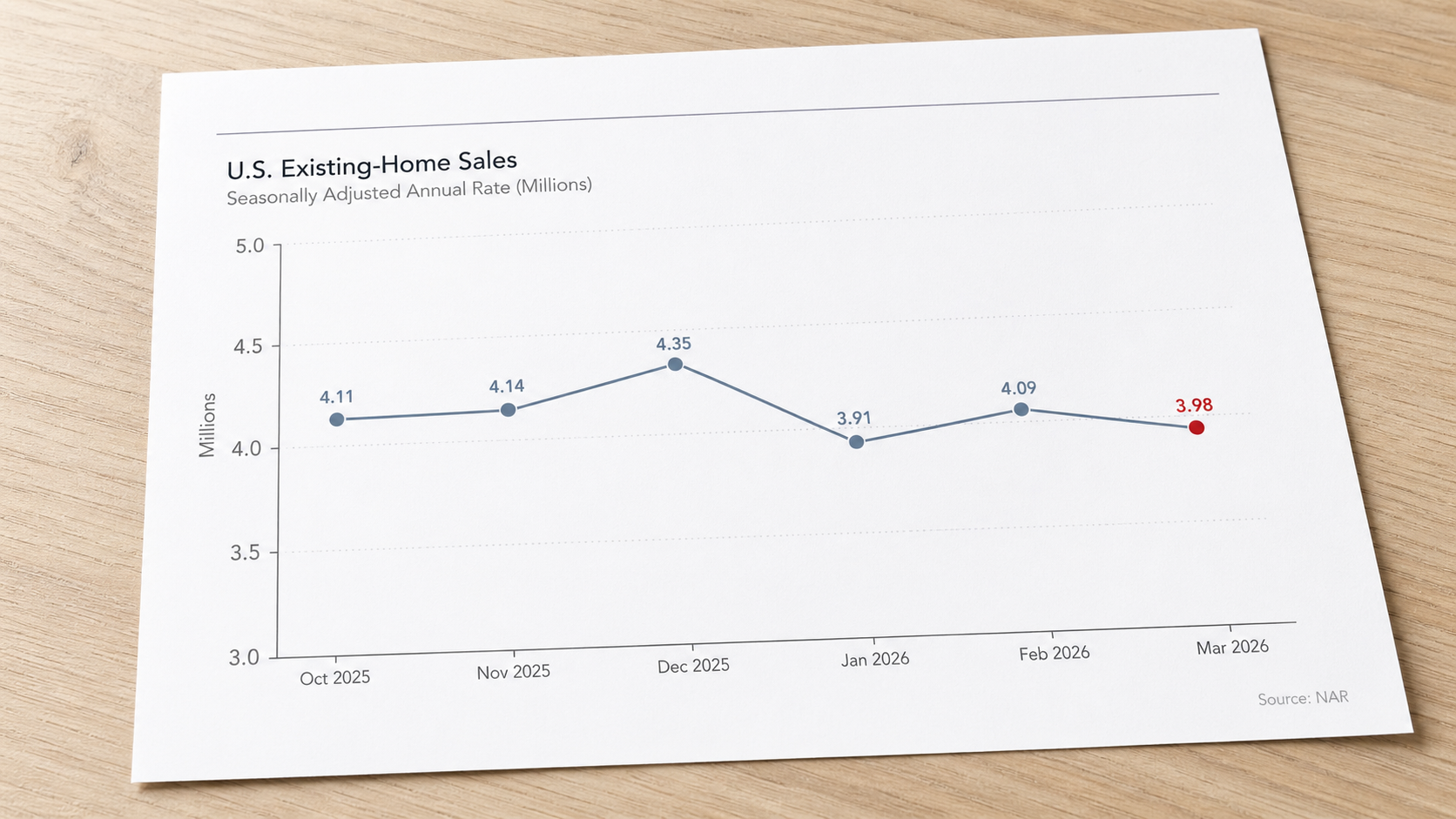
March existing-home sales hit a seasonally adjusted annual rate of about 3.98 million - a nine-month low, down 3.6% from February and 1% year over year. For context, that's the weakest March figure since 2009, when the country was still climbing out of the financial crisis.
Multiple factors converged. Rising rates, economic uncertainty, and winter weather all played a role, according to Bright MLS Chief Economist Lisa Sturtevant. But the bigger structural issue is something that's been true for a while now: most current homeowners locked in rates between 2.5% and 4.5% during 2020-2022. Selling means giving up that rate. Analysts say that pandemic-era lock-in effect is still firmly in place.
That creates a strange dynamic. The market has about a four-month supply of homes nationally. NAR's Yun says a balanced market needs five to six months, and the current market would need a 20-30% boost in inventory to give buyers meaningful breathing room.
So prices aren't crashing - the median existing-home sales price actually set a March record of $408,800 - but volume is stuck in low gear. Homeowners are still building equity. Buyers are still struggling to get in.
What This Looks Like in DFW Specifically
Here's where I want to zoom in, because the national numbers and the North Texas reality are not the same story.
According to researchers at UT Arlington, DFW home values fell around 5% in 2025, with broad softening across most counties. They project prices will likely stay flat or decline slightly through mid-2026. That's a meaningful correction from the frenzied years of 2021-2022. But it's also a normalization, not a collapse.
DFW's median home price sat at about $385,000 in February, down roughly 2.2% year over year, according to MetroTex. And here's the local twist that makes this market genuinely different from most of the country: Sunbelt markets like Texas attracted so much population growth and builder activity during the boom that supply has actually softened the resale market in ways you don't see in the Northeast or Midwest.
In plain terms: builders built a lot of homes here. That's creating inventory that older, supply-constrained markets simply don't have.
The North DFW Opportunity Most People Are Missing
This is the part I find genuinely interesting.
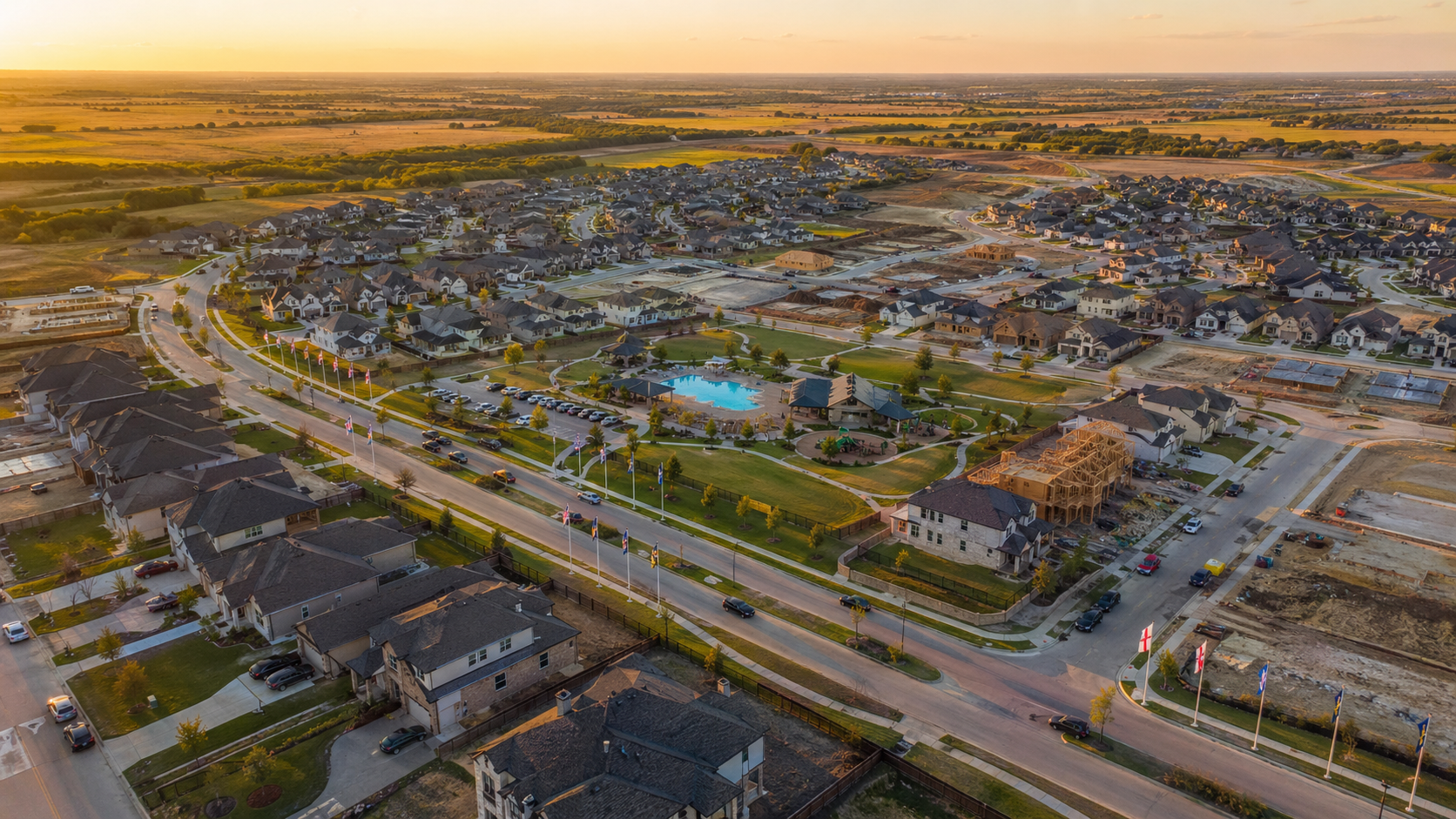
In areas with heavy new construction - Prosper, Celina, Anna in particular - inventory is up and negotiating room has expanded significantly. Builders are competing for a smaller pool of qualified buyers, and that competition is showing up as real incentives: rate buydowns, closing cost contributions, upgrade packages, and more flexibility on timelines.
One recent builder roundtable suggested that the $400,000 to $750,000 price range is currently the sweet spot for buyer opportunity in DFW. That mid-tier range is less crowded than the entry-level market (where first-time buyers are concentrated) and less insulated than the luxury segment (where rates matter less). If your budget lands in that zone, you may have more leverage than you've had in years.
Meanwhile, established communities in Allen, Plano, and McKinney are holding steadier on pricing because inventory is more limited there. The resale market in those areas isn't seeing the same kind of softening you'll find further north along the US-380 corridor.
That gap, between the established inner suburbs and the newer growth corridor, is something worth understanding if you're weighing your options.
What About Sellers?
I'll be honest: if you're a seller in North DFW right now, the playbook has changed.
A new Realtor.com report actually identified the week of April 12-18 as the optimal selling window for DFW homes this year, with listings expected to get about 23.5% more views than average and homes potentially spending nine fewer days on market.That's encouraging. But it comes with a condition: pricing has to be right from day one.
Across Texas, homes that have been on the market for 60 or more days are seeing median price reductions of about $19,000, or 5% off the original list price. The margin for overpricing has gotten very thin. (I cannot stress this enough. The "let's start high and see what happens" approach is costing sellers real money right now.)
If you're in a community that competes directly with new construction, the math gets more complicated. Builders are offering $30,000, $50,000, even $100,000+ in incentive packages. A resale listing needs to account for that in its pricing and presentation.
Here's What This Means for You
If you've been waiting for rates to settle before making a move, the honest answer is that stability may not arrive as quickly as any of us hoped. Oxford Economics expects sales to move sideways before gradually picking up toward the end of the year. That's not a signal to freeze. It's a signal to understand exactly what you're working with right now, because the buyers who are active in this market are finding real negotiating room - especially in new construction communities across Collin County. And sellers who price accurately from day one are still getting deals done in reasonable timeframes.
FAQ
-
It depends on your specific situation, but the conditions are genuinely more favorable for buyers than they've been in several years. Inventory is higher, competition is lighter, and builders are offering meaningful incentives. The key variable is your comfort with current mortgage rates and your monthly budget.
-
Prices have softened moderately -- DFW saw
about a 5% decline in 2025, and 2026 is tracking roughly flat to slightly down. That said, well-
priced homes in established communities are still holding value. The softening is most visible in
areas with heavy new construction inventory.
-
NAR originally predicted a 14% jump in existing-
home sales for 2026 based on expectations that rates would ease to around 6%. When rates rose
instead of falling, NAR revised the projection down to 4% growth. New-home sales, originally
expected to grow modestly, are now projected to remain flat.
-
Waiting is a gamble in both
directions. If rates drop, more buyers enter the market and competition increases (potentially
pushing prices up). If rates stay elevated, you've delayed without gaining anything. The most
reliable approach is to buy when the monthly payment works for your budget and refinance later
if rates improve.
-
Common incentives include
rate buydowns (both temporary and permanent), closing cost contributions, design upgrade
credits, and flex cash that can be applied to points or closing costs. Some builders are packaging$50,000 or more in combined incentives on inventory homes. These offers change frequently, so
it's worth asking what's current at any community you're considering.
-
As of February 2026, MetroTex reported
the median at about $385,000, down roughly 2.2% year over year. The actual price varies
significantly by city and neighborhood - homes in Plano and Frisco typically run higher than the
metro median, while newer growth areas like Anna and Celina often come in lower.
Conclusion
The 2026 housing market didn't unfold the way the forecasters expected. But forecasts are projections, not promises. What's actually in front of you right now, more inventory, motivated builders, and a market that's rewarding preparation over speed, is something you can work with. Understanding where your specific city, price range, and goals fit within these broader shifts is the most useful thing you can do right now.
If you want to talk through what these numbers mean for your specific situation, feel free to book a free 30-minute consult. Just a fact finding call, no obligation.
Sources
National Association of REALTORS®, "NAR Forecast: Home Sales Expected to Jump 14% in 2026," November 14, 2025. Link
Real Estate News, "Spring Market 'Fragile' as Existing Home Sales Hit 9-Month Low," April 13, 2026. Link
Fox San Antonio / TNND, "Lackluster Beginning to Spring Homebuying Season, With NAR Downgrading 2026 Forecast," April 13, 2026. Link
CultureMap Dallas, "DFW Home Market Tilts Toward Buyers as Mortgage Rates Climb," April 2026. Link
UT Arlington News Center, "UTA Expert: DFW Housing Market Hits Turning Point," March 6, 2026. Link
Texas Real Estate Research Center, "Texas Housing Insight, March 2026." Link
Walpole Realty Group, "What the 2026 Collin County Real Estate Market Means for Your Next Home Purchase," January 2026. Link
Zak Schmidt / DFW Homebuilder Plans for 2026, November 2025. Link